

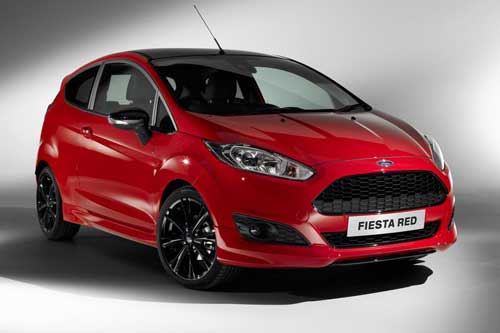
MK7 Fiesta 1litre Ecoboost (125PS)
Our tuning packages for the 125PS 1 litre Ecoboost start at +15PS at the MSD 140 and then we have the MSD 165 if you fancy a little more. We are of course happy to push further for those customers with bespoke hardware but as I am sure you can appreciate these are conversions that need some discussion as to what best suits you as a driver so those conversions are not detailed on the website.
.png "Fiesta 1 litre ecoboost tuning")
MSD 140 (205Nm and 140PS)
This calibration utilises a free flowing intake systems on an otherwise standard vehicle and optimises the calibration in order to enhance the power output to 205Nm and 140PS.
This isn’t just headline power either, flexibility and reliability are our speciality so the ECU's incredible torque model is fully retained ensuring factory driveability with no hesitations, surges or hiccups in the power delivery. Naturally, as with all MSD power upgrades, all necessary safety limits and protection strategies are re-profiled and enhanced in order to allow the extra performance whilst retaining a strong, O.E Level of engine protection.
Please be aware that power figures don’t tell the whole story with these management systems, making extra power is easy, but many companies completely disable the torque control and most of the protection strategies in order to do so and this can cause driveability and longevity concerns with often massive boost levels required to make the power. Read our comprehensive "Safety" tab for more details.
Additional hardware needed:
- Free flow induction kit
Standard Calibration Features
- Improved idle stability
- Factory driveability under all conditions.
- All engine protections remain in place (See safety tab)
Optional Personalisations Available:
- Decat MIL eliminated (For vehicle with a sports cat fitted)
- Eco shift light permanent disable option.
- Overrun burbles activated
- Static rev limiter adjustments
Additional fuel programming available. (Ask for further details)
- WMI (water methanol injection) optimisations available on request.
- Ethanol (E10-E40) optimisations available on request.
- High octane fuel optimisations available on request. (100+ RON)
Choose Your Installation Method:
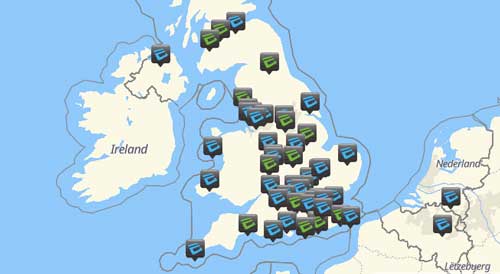
Installed directly to your vehicles PCM via OBD. This can be done here at our Blackpool workshop or via any of our approved installers across our global Evolution Chips network. (Visit the link below to find one via postcode search)
- Includes full vehicle diagnostics scan pre and post installation.
- Datalogging and adjustments where necessary.
- Full validation test drive.
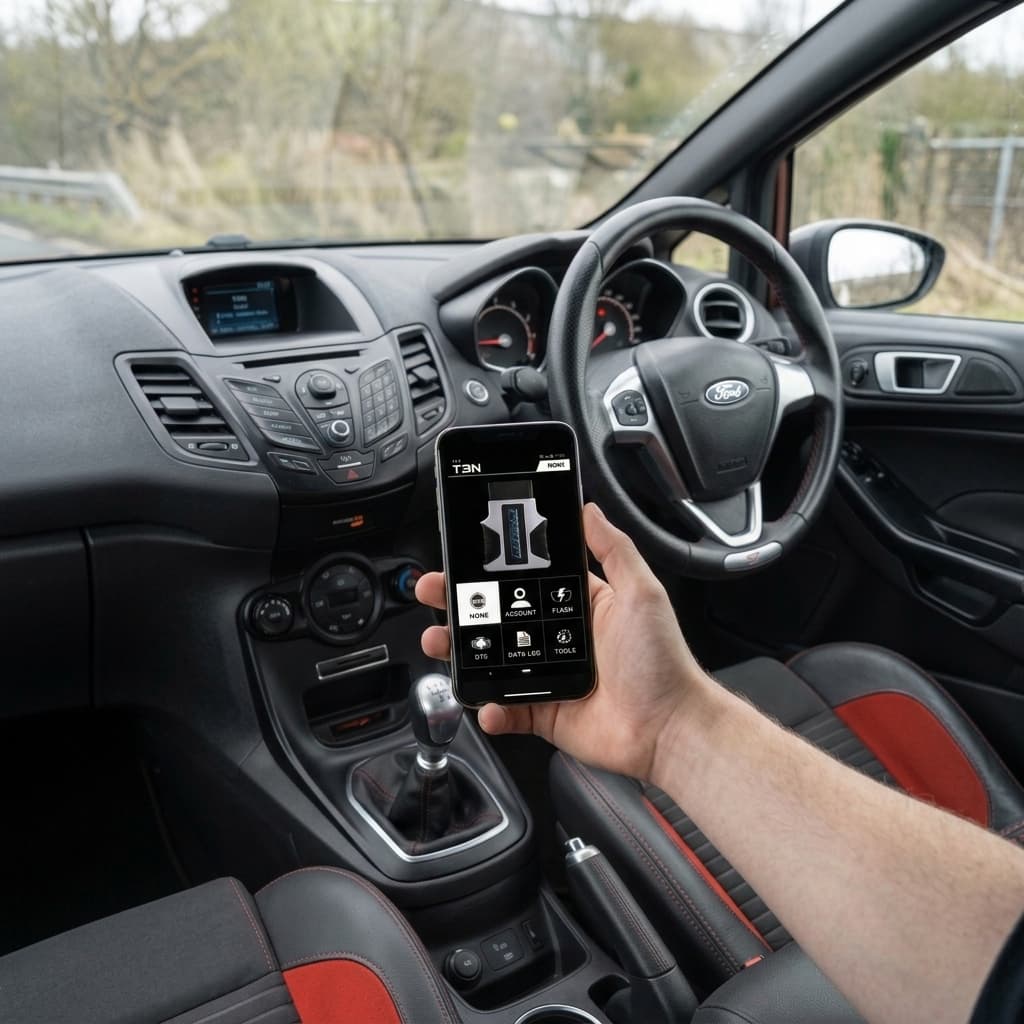
Sent out by post. Flash the MSD calibration directly from your driveway using your phone on the TDN cloud network.
- Powered by the HPTuners RTD4 interface and TDN cloud infastructure.
- Includes 1x Base calibration and 2x custom E-Tunes for true custom tuning via data analysis.
- High-speed datalogging and professional assessment by MSD calibrators to verify perfection.
MSD 165 (215Nm and 165PS)
This calibration utilises uprated intercoolers, free flowing exhaust and intake systems plus a colder grade of spark plug on an otherwise standard vehicle and optimises the calibration in order to enhance the power output to 215Nm and 165PS.
This isn’t just headline power either, flexibility and reliability are our speciality so the ECU's incredible torque model is fully retained ensuring factory driveability with no hesitations, surges or hiccups in the power delivery. Naturally, as with all MSD power upgrades, all necessary safety limits and protection strategies are re-profiled and enhanced in order to allow the extra performance whilst retaining a strong, O.E Level of engine protection.
Please be aware that power figures don’t tell the whole story with these management systems, making extra power is easy, but many companies completely disable the torque control and most of the protection strategies in order to do so and this can cause driveability and longevity concerns with often massive boost levels required to make the power. Read our comprehensive "Safety" tab for more details.
Additional hardware needed:
- Free flow induction kit
- Free flow exhaust with Sports Cat (Or decat)
- Uprated intercooler
Optional Standard Calibration Features
- Improved idle stability
- Factory driveability under all conditions.
- All engine protections remain in place (See safety tab)
Personalisations Available:
- Decat MIL eliminated (For vehicle with a sports cat fitted)
- Eco shift light permanent disable option.
- Overrun burbles activated
- Static rev limiter adjustments
Additional fuel programming available. (Ask for further details)
- WMI (water methanol injection) optimisations available on request.
- Ethanol (E10-E40) optimisations available on request.
- High octane fuel optimisations available on request. (100+ RON)
Choose Your Installation Method:
Installed directly to your vehicles PCM via OBD. This can be done here at our Blackpool workshop or via any of our approved installers across our global Evolution Chips network. (Visit the link below to find one via postcode search)
- Includes full vehicle diagnostics scan pre and post installation.
- Datalogging and adjustments where necessary.
- Full validation test drive.
Sent out by post. Flash the MSD calibration directly from your driveway using your phone on the TDN cloud network.
- Powered by the HPTuners RTD4 interface and TDN cloud infastructure.
- Includes 1x Base calibration and 2x custom E-Tunes for true custom tuning via data analysis.
- High-speed datalogging and professional assessment by MSD calibrators to verify perfection.
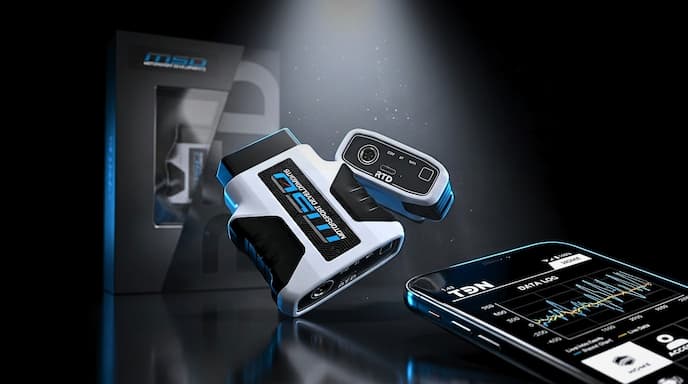
Next-Gen Home Tuning Option. The MSD RTD4.
All of our calibrations for your vehicle are now available by mail order. The ultimate combination of Motorsport Developments software, advanced RTD4 hardware, and the cloud-powered TDN application framework allows you to safely enjoy world-class ECU calibration from Motorsport Developments without ever leaving your driveway.
The MSD RTD4 Bluetooth Interface Device:
The RTD4 interface functions as a cutting-edge hardware link connecting your vehicle's engine control module directly to our engineers via Bluetooth and your smartphone. Far beyond an ordinary handheld programmer, the RTD4 acts as a robust diagnostic scanner, high-speed engine data logger, and ultra-secure ECU flashing interface built to withstand professional vehicle development workflows.
The TDN Network Application Framework:
Available on both iOS and Android platforms, the TDN app is your portal to our calibrators desk. It bypasses the need for clunky windows laptops and external file managers entirely. The app seamlessly links your smartphone to your plugged-in RTD4 interface via Bluetooth, uploading vehicle data to us and downloading bespoke MSD custom files for you right out of the cloud.
Our 6-Step Remote Tuning Process:
- Order Your RTD4 Interface Kit: Order your signature Motorsport Developments RTD4 hardware interface directly from our online webshop for trackable dispatch to your door.
- Download the TDN Mobile App: While your hardware package is on its way, download the official TDN Application via the Google Play Store or Apple App Store and configure your user profile.
- Read Your Factory File Baseline: Unbox your device and plug the RTD4 firmly into your vehicle's standard diagnostic OBD port. Switch on your car's ignition and select "Read File" inside the app via Bluetooth.
- Submit Data to Our Engineering Desk: Using the seamless transfer infrastructure built straight into the app, sync your read data file instantly up to the cloud tuning portal, noting down all mechanical bolt-on modifications.
- Flash Your Custom MSD Tune: Our dedicated calibration team reviews your setup and manually constructs your custom calibration. Open the app, hit "Write File," and easily program your vehicles PCM with your new performance calibration inside just a few minutes.
- Datalog and Fine-Tune (2x E-Tunes): Your remote tune includes a base tune and 2x MSD custom E-Tuning sessions for remote custom tuning. This system utilises the RTD4's high-speed engine data logger to capture real-world live data from your PCM and transmit it back to us for analysis, resulting in a 2nd and 3rd optimised tune delivered to you for programming, therefore locking in optimum efficiency, absolute engine component safety, and peak power delivery.
Beware:
All ECU "calibrations" are not created equally...
There are many ways to calibrate a modern vehicles ECU but the sad fact remains that a huge percentage of the tunes we see have had all the safety strategies and drive logic features removed from them. These MED17 PCM's have exceptional engine control strategies built into them and these systems are a key reason that as standard, these vehicles drive so amazingly well. Smooth, linear and powerful to the rev limiter. And safe too... the protection strategies are incredibly complex and work alongside a very comprehensive torque model in order to deliver what the driver asks, but keep the engine in one piece should things go wrong.
To recalibrate an MED17 PCM properly, from scratch as we do, takes many hundreds of hours of development on our in house dyno. But the results are worthwhile.
Rest assured that when we calibrate a vehicles PCM we retain:
- Full torque model remains intact. (This is what makes the vehicle drive so well)
- Knock control system is left intact and working (Guards against detonation)
- Over-boost limits. (Protects against over-boost due to fault)
- Under-boost limits. (Protects turbo against air leaks)
- Full Engine speed limits. (Raised if the tune would benefit)
- Exhaust temp load profiling. (Takes over if EGT exceeds limits)
- Fuel flow limit air control. (Takes over if you run too lean)
- Coolant temperature limits. (Never raised)
- All the ECU Limp home strategies. (These are what get you home!)
- All of the 300+ fault codes are retained so your ECU can report faults.
The above may look and read like common sense?
You are right... retaining everything above is desirable, but to do so requires an understanding of how these torque modelled systems work so that we can actually "recalibrate" the various sub-systems to work the way we want them to, whilst targeting higher airflow and power levels.
Sadly, because all of the above strategies will, by their very nature, fight our efforts to create extra airflow, many amateurs find ways to just disable the limits, often by "de-calibrating" the system so it will allow extra airflow.
We regularly see calibrations with various anticipation and prediction systems switched off, load limits flat-lined, air load limits totally disabled, fuel flow limits deleted, knock systems de-sensitised, the list goes on, its quite disappointing to see.
How would you know?
That’s a good question, and it depends just how bad they have de-calibrated the system.
Lets face a simple fact here... if you have a vehicle with a virtually standard engine and turbo that drove perfectly well before a re-calibration, extending its headroom wont make it drive or perform worse during normal driving. Why would it? No reason at all. Same engine, same air path, same hardware. So it should drive the same, but be faster at big throttle openings.
Now, if they have "only" removed all the safety limits (running more boost than a 3bar map sensor can see for example) then the vehicle will still drive perfectly well if the rest of the system has been recalibrated to properly request the torque the conversion makes. That kind of calibration will just have no safety limits in place should anything go wrong. hopefully it wont, so all is well.
However, if you start to disable the torque targeting system, or make a mess of recalibrating it then you end up with all manner of horrible drive-ability problems. Aggressive throttle, unpredictable or surging power delivery, doesn’t want to just cruise along at a set speed, these are all very common when a confused ECU tries to deliver closed loop airflow control with a broken model.
And if that wasnt bad enough, some of these de-calibrated strategies are of course firing out fault codes so we see some with all 300+ codes just deleted so the ECU cant report them. This in turn disables all the limp home strategies designed to take control and get you home in the event of component failure.
Sadly, this is the reality of modern tuning... Take care out there!
Further reading:
If this has wet your appetite to know more about how your Ford Ecoboost management strategy in the PCM works, you may well enjoy my series of 3 blogs about a very similar system.
Blog 1 of 4. Understanding Ford Ecoboost Torque Control
(There are more located in our main technical info section with Stus other 70+ magazine articles)
Purchasing Options:
This OBD calibration can be purchased via any one of our professional Installers:
Owners looking to have their vehicle tuned can have it done by us here in Blackpool, or via any of our approved calibration installers across our Evolution Chips network.
With over two decades of Ford RS & ST tuning experience we are more than happy to advise and discuss tuning options with your vehicle. We can tailor our remaps to your requirements either through custom or live remapping. Tuned in house or remotely, you will have our full support and backup all the way.


